

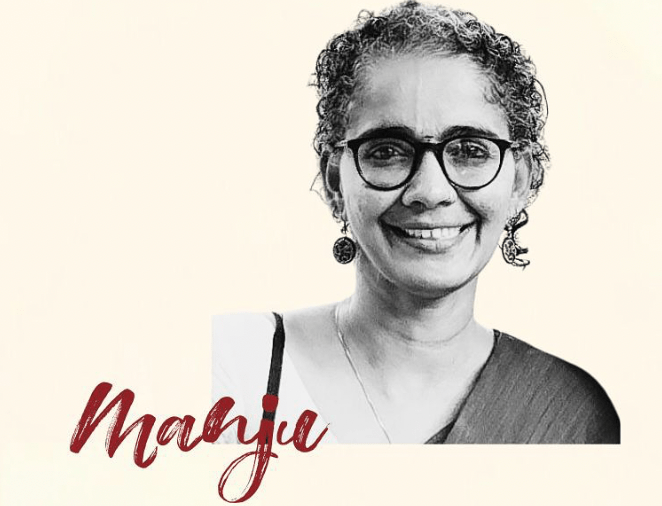
Forest Post – a venture that is far more than just a brand; it’s a bridge between ancient forest wisdom and modern markets, spearheaded by an inspiring ecologist, Dr. Manju Vasudevan. It was an honour to capture the story of Manju, who has truly followed her passion and her venture, Forest Post.

(The conversation / podcast capturing this amazing journey is now available on Spotify and Apple Podcasts, give it a listen.)
Manju decided to the take the ‘road less travelled’ and is on an amazing journey helping people and the nature , the best possible way. An ecologist with a great academic record decided to enter the forest and take matters into her own hands to help the indigenous people. This beautiful collaboration has nurtured into her business venture ‘Forest Post‘.
The Genesis: From Ecology to Empowerment
Manju Vasudevan, a trained ecologist with a Master’s from Pondicherry University and a PhD from Imperial College London, spent over 15 years in research, including post-doctoral work at UC Santa Barbara. Her journey, which involved adventurous tree-climbing for pollination studies, led her to a profound realization: the strength of community-based conservation. She recognized that indigenous Adivasi people are the true custodians of the forest, guiding all ecological research, yet often overlooked in conservation efforts. This understanding was solidified during her time at Keystone Foundation, an NGO that championed inclusive conservation.
The shift from pure research to enterprise-building began in Kerala with the River Research Centre, where Manju aimed to replicate Keystone’s community-centric model with women’s groups. A project funded by the Netherlands-based Global Alliance for Green and Gender Action (GAGGA) trained 20 to 30 women across four or five villages between 2016 and before COVID. When this project funding ended, Manju continued as a volunteer for 8 to 10 months, supporting these women and their nascent product lines, which were still unbranded and sold in a “haphazard” manner.
The pivotal moment arrived in 2021 when the UNDP India High Range Mountain Landscape project approached Manju, encouraging her to formalize the initiative into a business entity. Despite her initial diffidence, lacking a business background, UNDP’s persistence, coupled with the women’s desire to take their work to the “next level,” became the final trigger. The brand strategist recommended “Forest” in the name for easy recall, leading to “Forest Post” – inspired by Manju’s idea of “postcards from the forest“. The branding rapidly took shape, complete with a website, and Forest Post was officially born in July 2021, five years after the initial groundwork began.

Products Rooted in the Forest, Crafted for Wellness
Forest Post primarily works with Non-Timber Forest Produce (NTFP) or minor forest products, which are crucial for the economic survival of many Adivasi communities in the Western Ghats and across India. Manju’s objective was to intervene where traditional procurement systems by the Forest Department were not adequate, ensuring better returns for the producers.
The below map and the instagram post from Forest Post will give some in roads about the beauty of the work done by Manju and her team:

Forest Post’s diverse product portfolio, comprising almost 100 SKUs, is categorized into:

• Beeswax Skincare & Haircare: Based on traditional recipes shared by the women.
• Wild Edibles: Including items like amla, wild grapes, ancient foods like queen sago and arrowroot, which Manju aims to revive and incentivize. Products that these are often “purer than organic” because they come directly from the forest.
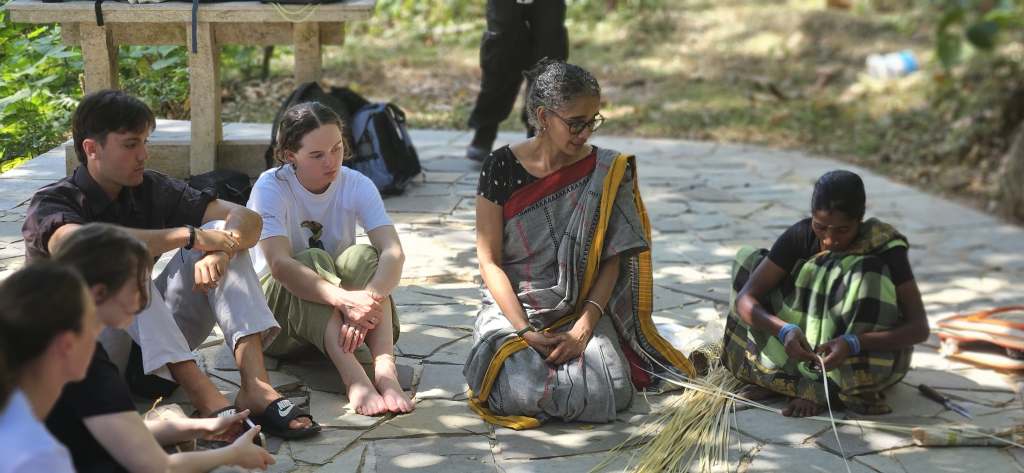
• Bamboo Craft: A traditional art form, with one particular weave, the Kanaadi paaya (hand woven bamboo mat), having achieved a GI tag.
• Macrame and Crochet Craft: These were introduced to engage younger women who might not be forest-dependent, often incorporating unique forest finds like the seabean.
A significant aspect of Forest Post’s model is ensuring fair compensation. They pay women 40% higher wages than NREGA rates and NTFP prices are 25% higher than market rates, often double for produce like the seabean. This directly supports the livelihoods of the 75 odd women from six different Adivasi communities they work with, primarily in central Kerala’s Periyar River basin, and a group in Tamil Nadu.
Navigating Challenges and Planning for the Future
Despite the unique offerings and strong social mission, Forest Post faces the realities of a competitive market. The skincare market, for instance, is highly saturated, making pricing and comparison challenging against larger, well-funded brands. However, for many of their rare food and craft products, there is no direct comparison, allowing for more flexible pricing based on their internal costs. Manju acknowledges that high-end resorts have even suggested their products are underpriced, indicating potential for premium product lines and better positioning. Marketing is a continuous challenge, with dependence on grants like the one from Kerala Startup Mission for digital marketing, and high costs associated with stall fees at events.
Currently, Forest Post utilizes only about 20% of both the available woman power and the locally abundant forest resources. This highlights an immense potential for growth, enabling more work for the women and greater utilization of neglected forest products, while still being mindful of sustainable harvesting practices and wildlife needs. Manju, who speaks Tamil, Malayalam, Hindi, and manages Kannada, regularly meets with communities, often weekly, spanning diverse forest and difficult terrain. She often finds herself acting as the bridge between communities and urban customers, given her ability to articulate their story.
Looking ahead, Forest Post’s vision is not about geographical expansion, but about deepening its roots in the existing villages. Key objectives include:
• Improving sales and providing more sustained work for the women.
• Collaborating with responsible travel companies and chef partners for culinary events, leveraging the “foraging lifestyle” and ancient foods for rich storytelling opportunities.
• Increasing brand recall so people recognize their distinctive bird logo and products from a distance.
Forest Post products can be found on their website, forestpost.in, as well as other platforms like My Pahadi Dukaan, Flourish, and Amazon, and select retail stores like Freshivores in Bangalore. Each purchase helps Manju and her team realize their goal: providing dignity and sustainable livelihoods for the Adivasi women who are the heart and soul of Forest Post.
Awards for the work done by Manju shows that the recognitions are slowly and steadily going to keep coming her way.
Manju Vasudevan is doing exemplary work in celebrating the extraordinary connection between people, planet, and purpose.
Give them a follow on Instagram.
There are some interesting blogs written by the Forest Post team which are available on the Forest Post website which will give you more insights and also read more about the amazing Forest Post team.
 PAC Talks